


Not a pathway into gaming but a pathway into a digital future through gaming. Esports is where digital society moves fastest, giving you a front-row seat to platforms, communities, and culture in motion. This degree offers a unique forward-thinking and globally relevant educational experience rooted in Nordic academic excellence and intercultural collaboration, using the realities of today’s digital society to prepare graduates for what comes next.
ECTS credits:
120
Duration:
2 Years
Teaching language:
English
Student places:
20
Mode of study:
Full-time, in-person
Semester:
Autumn 2027
Application opens:
1 Nov/1 Feb
Application deadline:
1 Dec/1 Mar/15 April
Esports, or competitive video gaming, brings together sport, business, entertainment, technology, digital media, and community. This is not a traditional esports-management or sports Master’s degree. Rather than preparing students solely for careers within esports, the specialisation uses esports and digital play as starting points for understanding broader transformations in business, media, technology, culture, and society.
Students learn from internationally active researchers with expertise spanning esports, games, digital culture, business, communication, technology, and society. The universities’ connections with industry and other external organisations also help students relate academic knowledge to contemporary challenges and professional practice.
Through opportunities such as internships, article-based theses, and academic research, graduates can prepare for diverse career paths, including doctoral studies and leadership roles in digital innovation, media, business, education, and society. Overall, the Master’s offers a distinctive combination of academic rigour, international experience, and professional versatility.
The joint Master’s in Academic Esports and Digital Society developed by Tampere University (Finland), University of Agder (Norway), and Jönköping University (Sweden) offers a forward-thinking, globally relevant educational experience. Rooted in Nordic academic excellence and intercultural collaboration, the specialisation is for students across Europe and beyond.
Esports, as a born-digital and international phenomenon, serves as a powerful lens to examine the societal, cultural, and economic impacts of digitalisation. The curriculum combines technical understanding, digital media literacy, and business acumen with a strong human-centred perspective. Alongside learning to work effectively with emerging technologies and artificial intelligence, students develop capabilities that remain distinctly valuable in an AI-enabled world: critical judgement, creativity, ethical reasoning, intercultural communication, collaboration, and the ability to understand complex human and social contexts.
Unlike traditional esports programmes focused on industry-specific roles, this Master’s uses esports as a context to develop transferable skills applicable across technology, media, education, and entrepreneurship. Using esports as a dynamic lens, the specialisation develops critical understanding of digital society, business, and media. Students gain know-how in platform governance, digital entrepreneurship, brand strategy, and streaming ecosystems, alongside technical skills in digital technology, data analytics, and human–computer interaction. The curriculum emphasises transferable competencies such as strategic thinking, intercultural collaboration, ethical reflection, and innovation.
With options for internships, article-based theses, and academic research, graduates are well-prepared for diverse career paths, including doctoral studies and leadership roles in digital innovation. The specialisation’s multidisciplinary and holistic approach equips students to navigate change, connect knowledge across fields, and contribute responsibly to the future of a digitalised society.
In summary, this Master’s offers a unique blend of academic rigor, global relevance, and professional versatility, making it a compelling choice for those eager to engage with the transformative potential of esports. Students who are passionate about gaming and esports may find this the perfect choice, but it is particularly suited to motivated students familiar with academic success, whose interests cross traditional disciplinary boundaries and who want to develop the knowledge and human capabilities needed to thrive in an increasingly digital and AI-shaped world.
Unlike traditional esports programmes focused on industry-specific roles, this Master’s uses esports as a context to develop transferable skills applicable across technology, media, education, and entrepreneurship. Students gain access to global networks like the Esports Research Network (ERN), connecting them to over 680 members globally, thereby enhancing career mobility and international exposure.
Using esports as a dynamic lens, the specialisation develops critical understanding of digital society, business, and media. Students gain know-how in platform governance, digital entrepreneurship, brand strategy, and streaming ecosystems, alongside technical skills in digital technology, data analytics, and human–computer interaction. The curriculum emphasises transferable competencies such as strategic thinking, intercultural collaboration, ethical reflection, and innovation.
The specialisation blends theoretical and applied learning, with options for internships, research projects, and article-based theses. Its structured curriculum spans Digital Society, Digital Business, and Digital Media, while allowing students to personalise their academic journey. Ultimately, the joint Master’s equips graduates with the skills and insight to lead in a digitalised world, both within and beyond the domain of esports.
After completing the Master’s Degree, the students will be able to:
The master’s program is a full-time two-year course. The first year of the degree is based at University of Agder in Norway and includes the potential for an internship at Glitched LAN and gaming festival in Sweden. For the second year, students will be based at Tampere University in Finland.
For more detailed information, see the “mobility” section below.
Module 1: Esports and (digital) society.
Module 2: Esports and (digital) business
Module 3: Esports and (digital) media
Module 4: Master’s Thesis (30 ECTS)
The Esports Research Network (ERN) is an international network of over 650 researchers from across the globe whose aim is to advance interdisciplinary esports studies. More than 60 different nationalities are represented among its membership from across six continents. The ERN connects scholars and industry representatives to explore esports’ global, digital, and innovative impacts.
ㅤ
Glitched is a LAN and gaming festival at Elmia in Jönköping that brings digital gaming culture into a shared physical space and was launched in 2025. Combining esports tournaments with cosplay, indie games, trading cards and creator meetups, it attracted over 15,000 visitors in 2025 and more than 21,000 in 2026, making it Sweden’s biggest LAN festival. Its appeal extends beyond competition: visitors come to meet friends, express their identities and participate in gaming communities. With an inclusive environment, Glitched illustrates how LAN festivals create value through belonging and participation, with visitors, volunteers and communities helping shape the experience. Glitched collaborates with Jönköping University, Jönköping Municipality and GRO36 to strengthen the city’s gaming ecosystem. This has included initial work with local university students developing festival concepts and pitching them to industry partners at GRO36, connecting education with local businesses and community development.
The Talent Nexus was launched in 2026 within the Jönköping Gaming Hub at the event through Jönköping University and Jönköping Municipality to connects the gaming community with employers, creating opportunities to recognise players’ skills and build relationships with local businesses. The plan is for students on the forthcoming Nordic master’s in Academic Esports & Digital Society to engage through internships with organisations in this ecosystem, linking academic learning to practical projects. Collaboration between Jönköping University, the municipality and GRO36 could extend these connections beyond the festival, helping students gain experience while supporting local organisations and retaining talent in the region.
The Academic Esports Seminar is part of a larger esports initiative at the University of Agder, contributing to the development of the Agder region as a hub for esports innovation and excellence.
This interdisciplinary event aims to foster a comprehensive dialogue on the integration of esports into educational settings, examining its impact, exploring innovative practices, and envisioning the future of learning through the lens of gaming. Through a mix of practitioner-oriented sessions, academic presentations, and a dedicated doctoral workshop, it seeks to catalyze collaboration, inspire educational advancements, and contribute to the scholarly discourse on academic esports.
https://flare.academicesports.net/?p=2182
GamiFIN is a meeting place where researchers, industry representatives, practitioners and experts present findings from their latest work regarding gamification, technology, media and digital culture for the future society. The conference is organized by the Research Centre of Gameful Realities, a Tampere University research team that brings together a global community of scientists, industry members and officials.
It has attracted visitors from Australia, Austria, Brazil, Canada, Chile, China, Germany, Greece, Ireland, Italy, Japan, Korea, South Africa, Spain, Sweden, Switzerland, the United Kingdom, and Finland. In 2025, the acceptance rate for submissions was 35.1%, highlighting the high quality of the presented papers and posters. The proceedings of the conference have been published in the ACM International Conference Proceedings Series (ICPS).
https://gamifinconference.com/
Academic Mindtrek is a multidisciplinary event and a meeting place where researchers, experts, students, and thinkers present results from their latest work regarding the development of novel technology, media, and digital culture for the society of tomorrow.
Academic Mindtrek is part of the Mindtrek technology conference. Mindtrek brings together people not only from various fields and domains but also from different sectors: from companies, startups, academia and various governmental institutions. This makes Mindtrek the perfect opportunity for advancing research results towards practical utilization by the industry.
All accepted papers, pictorials, workshops, demonstrations, and posters are published in the ACM Digital Library under the International Conference Proceedings Series (ICPS).
https://www.mindtrek.org/academic-mindtrek-2026/
Since its inauguration, members of ERN have held international conferences hosted in France, Sweden, the UK, and Japan. Reflecting the diversity and innovative spirit of esports itself, it has even hosted a continuous, live digital conference with four regional hubs operating as research and live-streaming nodes. These hubs were hosted by Slippery Rock University of Pennsylvania and Michigan State University (Americas), Staffordshire University (Europe, Middle East and Africa), and UNSW Sydney (Asia-Pacific). Together, the hubs enabled ERNC25 to follow the sun across time zones and remain continuously live throughout the three-day conference.
For more information visit: https://v3.esportsresearch.net/conferences/
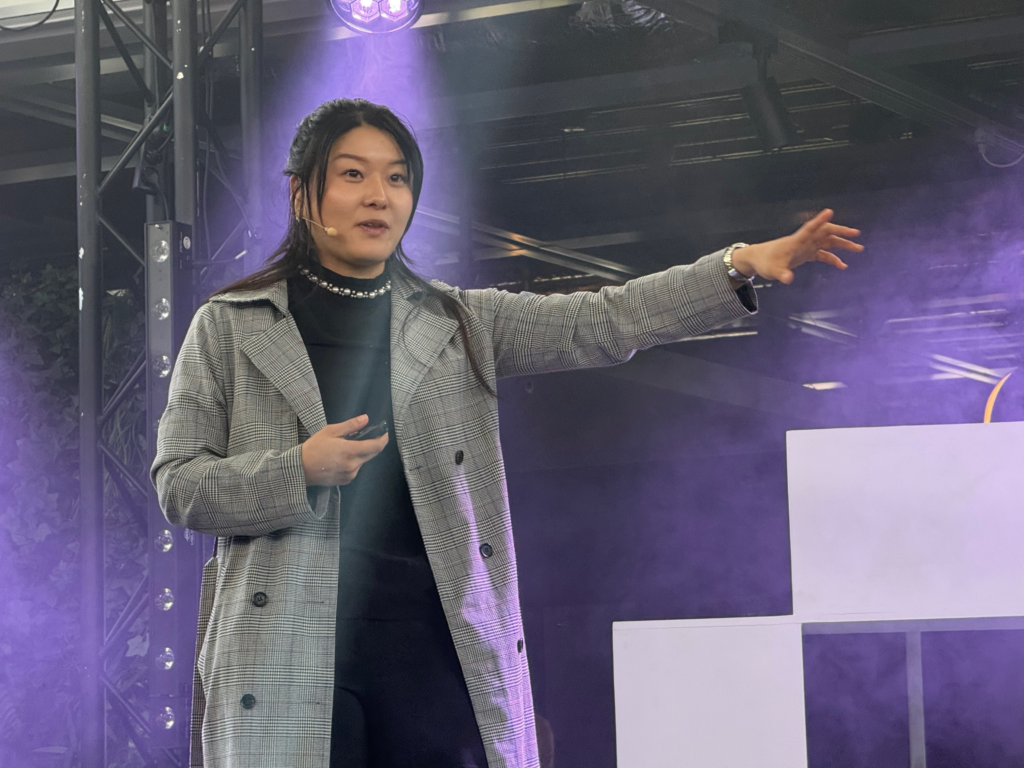
“As technology and AI continue to reshape our world, preparing students for a specific career is no longer enough. We need education that empowers people to understand our changing digital society, think critically, and adapt to whatever the future holds. The University of Agder’s new master’s programme reflects this forward-thinking approach, putting people at the center of learning and preparing graduates not just for the jobs of today, but for the opportunities and challenges of tomorrow.”
The specialisation supports mobility and international experience, and reflects a strategic focus on using games to address societal challenges, ensuring students contribute to and benefit from impactful research and innovation.
The master’s program is a full-time two-year course. The first year of the degree is based at University of Agder in Norway and includes the potential for industry internships such as at the Glitched LAN gaming festival in Sweden. For the second year, students will be based at Tampere University in Finland with students where they will complete their thesis.
Studying in the Nordic countries offers an exceptional opportunity to combine academic excellence with an outstanding quality of life. Consistently ranked among the world’s most innovative, safe, and sustainable societies, the Nordic region provides an ideal environment for international students seeking both personal and professional growth.
Nordic universities are known for their student-centred approach to learning, encouraging critical thinking, creativity, collaboration, and independence. Rather than simply memorizing information, students are challenged to solve real-world problems, work across disciplines, and develop skills that are highly valued by employers around the globe. Strong connections between universities, industry, and the public sector also provide opportunities for internships, research collaboration, and career development.
Living in the Nordic countries means experiencing a society built on trust, equality, and inclusiveness. International students enjoy access to modern infrastructure, efficient public services, excellent healthcare systems, and vibrant multicultural communities. English is widely spoken, making daily life and integration easier for students arriving from around the world.
The Nordic region is also renowned for its breathtaking natural environments, from pristine forests and thousands of lakes to dramatic coastlines and the Northern Lights. Students can enjoy an active lifestyle, with easy access to outdoor recreation throughout the year.
A Master’s degree earned in the Nordic countries is internationally respected and prepares graduates to succeed in a rapidly changing global economy. By choosing to study in the Nordic region, students gain more than a degree: they become part of a forward-looking society that values knowledge, innovation, sustainability, and global engagement.
Read more about student life in Southern Norway and what to expect here
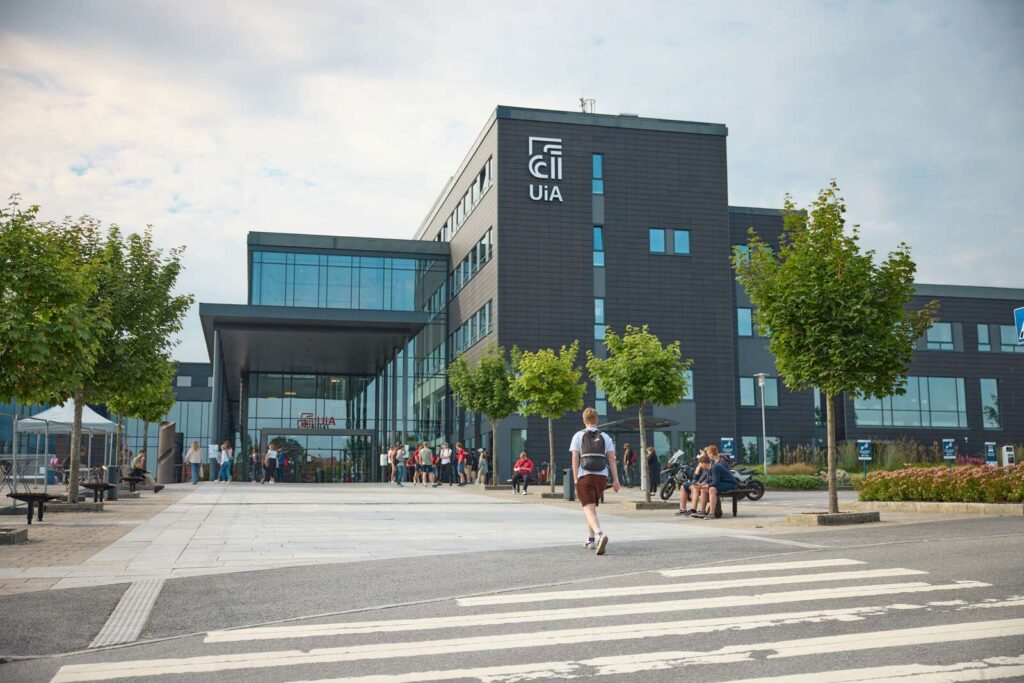
University of Agder, Grimstad campus consistently achieves high marks for both its academic and social offerings, as highlighted in the national student survey, Studiebarometeret. Our campus is celebrated by our students not only for its exceptional academic environment but also for its affordability as a place of residence. This vibrant student city is brimming with exciting opportunities!
As part of the programme’s first year, based at the University of Agder in Norway, students have the opportunity to undertake an internship at Glitched, a major LAN and gaming festival held in Sweden. Students will take ownership of the Talent Nexus, an initiative connecting gaming community talent with regional businesses, at Jönköping kommun’s expo space at Glitched.
The internship is administered through Jönköping University (JU) is one of Sweden’s leading independent, non-profit higher education institutions, known internationally for its entrepreneurial culture, strong industry ties, and applied research profile.
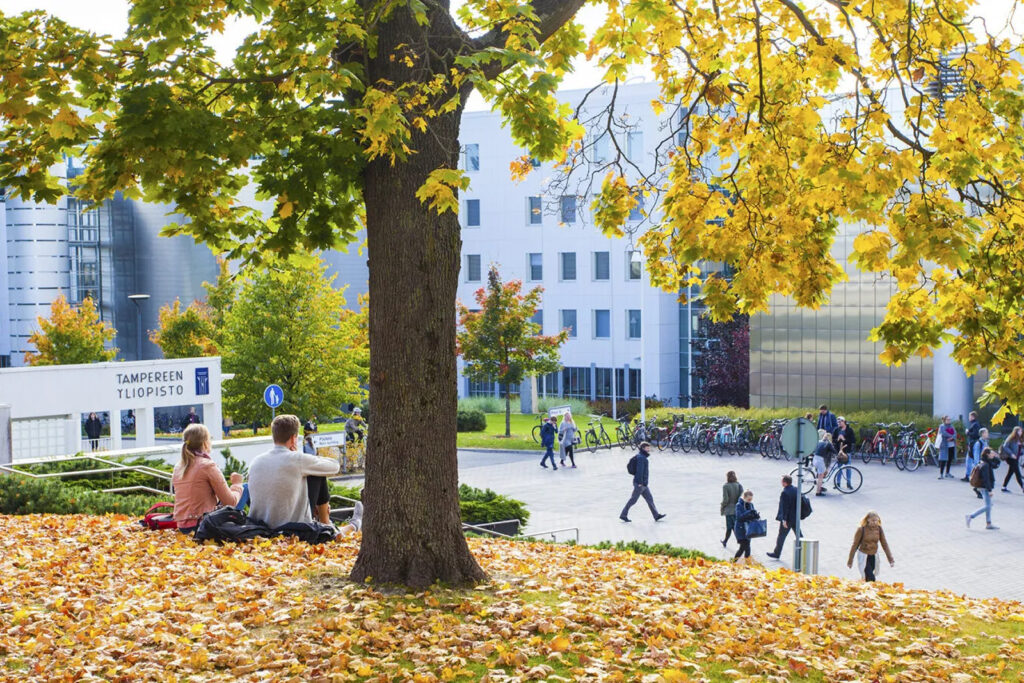
Tampere is the third largest city in Finland and the largest inland city in the Nordic countries. In Tampere every fifth resident is a student which contributes to the relaxed and vibrant atmosphere of the city. It’s also visible in good student housing facilities, a plethora of student events, and discounts for students in shops and services around the city. Did you know that there are 8000 festivals and events in Tampere each year?
“Academic Esports is a truly unique programme that allows you to shape your studies around so many different areas, depending on what you are interested in. I love how many growth opportunities I’ve had here as a student – practicing leadership and teamwork, project management, research, event organisation, social media, and esports management.
Another major highlight is how it provides amazing networking opportunities. There are so many conferences, seminars, festivals, and other events where students can volunteer, gain practical experience, and meet key industry professionals. Academic Esports at UiA offers endless possibilities, and it’s there for anyone willing to take initiative. With enough motivation, you can achieve so much! I am very grateful for my experience studying here.”
This Master’s specialisation is more than a gateway into esports, it is a launchpad for leadership across the digital economy. With a strong foundation in both theory and practice, graduates are prepared to shape the future of work, media, and society through innovation, inclusion, and strategic insight.
Graduates of the specialisation are well-positioned to pursue careers in a variety of sectors, including technology, media, education, public service, and academia. Depending on their prior experience and chosen study pathway, graduates may pursue roles such as digital transformation specialist, innovation or project manager, digital media strategist, community manager, audience or market insights analyst, user experience researcher, policy adviser, learning technology specialist, esports programme manager, academic researcher or emergent careers .
The specialisation also provides a strong foundation for doctoral studies, providing the required background to pursue doctoral studies in Norway, Finland and Sweden, or further abroad. Relevant fields of study include Digital Media Studies, Information Systems, Computer Sciences, Human-Technology Interaction and more.
Graduates of the specialisation are well-positioned to pursue careers in a variety of sectors, including technology, media, education, public service, and academia. Some possible career pathways include:
This Master’s specialisation is more than a gateway into esports, it is a launchpad for leadership across the digital economy. With a strong foundation in both theory and practice, graduates are prepared to shape the future of work, media, and society through innovation, inclusion, and strategic insight.
The Master’s Joint Degree provides the required background to pursue doctoral studies in Norway, Finland, or further abroad. Relevant fields of study include Digital Media Studies, Information Systems, Computer Sciences, Human-Technology Interaction and more.
Applications will be administered by the University of Agder using the following timetable:
Tuition Fees:Applicants from outside the EU will need to pay tuition fees. This joint programme is conducted with partner institutions from other countries and, therefore, it is outside the normal fee structure. Tuition fees for this degree have been set at 126,200NOK / €12,000 per year.
Eligibility criteria for the Joint Degree consist of two parts: general eligibility criteria, and programme-specific eligibility criteria, which specify and/or add to the general criteria. Applicants who do not meet both the general eligibility and the programme-specific eligibility criteria will not be admitted to the joint degree. Detailed instructions on how to apply to the joint degree are provided on the How to Apply webpage and its subpages.
To be eligible to apply for a master’s programme, you must have
1. Bachelor’s degree – nationally recognised first cycle degree:
A bachelor’s degree completed in a university which provides eligibility for equivalent university master’s degree studies in the country in which it was awarded: with a minimum scope of 180 ECTS credits, three to four years of full-time study; from a relevant field for the master’s degree programme that you’re applying to; from a recognised institution of higher education.
2. A documented good command of the English language for academic purposes.
Applicants from EU/EEA are eligible to apply if they are in the final year of a bachelor’s degree due to graduate in the spring/summer of 2027 and fulfil all other requirements. Please see special instructions for applicants in the final year of the bachelor’s degree.
Admission takes place in accordance with regulations on admission to studies and courses at the University of Agder.
To be eligible to apply to the specialisation in Joint Degree Academic Esports and Digital Society, you must have a completed, suitable bachelor’s degree or equivalent in:
A weighted average grade of C or better is required.
Admission is based on academic evaluation of academic qualifications and merits shown in the application. In the selection process, the following criteria and requirements are evaluated as a composite:
All eligible candidates are ranked. The assessment, based on the applicable set of criteria (above) is conducted by a Selection Committee. Each application will receive a mark from 0 to 100. This mark is part of the internal selection procedure and will not be communicated to the applicants.
Admission results for non-EU applicants will be published by March 1st. Results for EU applicants will be published between June 1st and July 10th. All applicants will be informed about the admissions results.
For more information refer to the Application Results webpage.
For EU/EEA applicants there is a waiting list procedure in University of Agder’s Master’s Programme Application Period 2027, those on the waiting list will be notified no later than July 10th.
The Admissions Office at UiA can answer questions about the application process. For questions about the programme itself, please contact your faculty. See the contact details at the bottom of this page.
Norway
Financial security/sufficient funds – https://studyinnorway.no/cost-and-requirements
Health Insurance (EHIC)
Finland
EU and EEA nationals and non-EU nationals with a comparable status (EFTA countries) do not need a residence permit before arrival. However, as you will be staying in Finland for over three months, you will have to register your right of residence once you arrive. The registration should be done within three months of your arrival with the Finnish Immigration Service (Migri). Please observe that citizens of a Nordic country register their right of residence at the Digital and Population Data Services Agency.
For more information, please go to Migri’s page on Registration of the right of residence of a citizen of the European Union.
Financial security/sufficient funds – https://www.tuni.fi/en/tau/financial-matters
Health Insurance (EHIC)
https://www.studyinfinland.fi/
Applicants from outside the EU will need to pay tuition fees. This joint programme is conducted with partner institutions from other countries and, therefore, it is outside the normal fee structure. Tuition fees for this degree have been set at 126,200NOK / €12,000 per year.
All students from outside the EU/EEA must apply for a residence permit to stay in Norway for more than 90 days. Submit your documents early to have a better chance at getting your study permit in time for semester start.
Successful applicants from outside the EU must document the ability to finance living costs in Norway for a whole academic year. Students without a Norwegian bank account in their own name need to pay a deposit for living costs to the University of Agder’s bank account to receive the required documentation.
For further information on tuition fees and deposit for living costs please visit: Tuition fees – University of Agder.
Visit UDI (the Norwegian Directorate of Immigration) for more information on what documents you need to upload when applying for a study permit to Norway.
Non-EU students usually need a residence permit for studies in order to stay in Finland for the duration of their studies. The first residence permit should be applied for online and is followed by a visit in person to a Finnish mission (embassy, consulate, designated service provider). This can be done while in Norway during the first year of the degree, there is a Finnish Consulate in Oslo.
When applying for a residence permit, a financial statement is also required. You will be requested to show that you have sufficient funds to support yourself during your stay in Finland. In addition, you must attach a copy of a comprehensive health insurance coverage to the application.
Further information on residence permit for studies is available on the website of the Finnish Immigration Service (Migri). It is a good idea to check the website of the Finnish mission for any country-specific instructions. You will find the contact details of Finnish missions at Finland Abroad.
This programme is part of the University of Agder’s Master’s Programme Application Period 2027 with studies starting in August 2027. We accept only one online application form per applicant per application period, with a maximum of 3 different master’s programmes for applicants from EU/EEA, for applicants from non-EU/EEA countries a maximum of 1 application can be made.
When applying, applicants must prioritise their programme choices (1st-3rd). If accepted, an applicant is offered a study place in only one programme (the highest prioritised programme that they qualify for). Please note that the order of preference is binding, and it cannot be changed after the application period ends.
Applications are administered by University of Agder, Norway, and are submitted via the electronic application system. The online application form will be available only during the application periods listed above.
Detailed instructions and information on how to apply are stated on the How to Apply webpage and its subpages. All the required attachments are mandatory in the separate admission process for the master’s programmes offered in English and applications will not be processed if all required documents are not submitted by the deadline for submitting attachments.
You can edit your application only during the relevant application periods listed below.
The intake is limited to 20 students
You will only be offered one study place per academic term leading to a higher education degree that begins in the same academic term.
If you accept this offer of a study place, you will forfeit all prior study places of the same or lower degree levels. For more information on this provision, read the Limitations on granting a new right to study .
Applicants are required to submit a personal statement in the form of a short video (between 3-5 minutes) along with their application. Applications without a video will not be considered and applications with videos exceeding 5 minutes will not be considered.
Your personal statement video is used to assess your motivation to complete the degree. It also gives us an initial understanding of your academic interests and how you see the programme supporting your scientific or professional goals. The required length of the video is between 3-5 minutes.
As part of the video, please introduce yourself and state your rationale for applying to the master’s program and why you feel you are a good candidate.
Prompts/questions to consider (please do not feel obligated to include all of them, nor to limit yourself to these, they are intended as a guide):
When reviewing the video, we will focus on your ability to communicate succinctly and clearly about who you are and how you see yourself profiting from this study programme. We will not be judging the video on image and sound quality, editing or other technical aspects.
Your personal statement video will be assessed based on both content and language and in accordance with university standards. You must present your personal statement video in English.
Your personal statement video must be based on your own independent reflection, experiences and reasoning. You may use AI tools to support the drafting process. If you use AI tools, you must clearly disclose your use of AI and provide a detailed description at the end of your video of how these tools were used.
This disclosure must state the purpose for which AI was used and describe how you edited any AI‑generated content. Failure to disclose the use of AI tools constitutes academic misconduct.
When applying to the joint degree, you must submit proof of English language proficiency for academic purposes. You have two options for demonstrating this: language tests or qualification for exemption. Requirements differ according to which country you are from. Please see detailed instructions on the relevant country page listed here.
You will need to upload scanned copies of the original documents as attachments to the application form. In addition to the general application attachments, there may be additional programme-specific attachments that are needed when applying.
All the required attachments are mandatory, and missing attachments may lead to a rejection in student selection. Requirements differ according to which country you are from. Submit the attachments as instructed on the relevant country page listed here.
In addition to University of Agder’s general application attachments, you are also required to submit the following for the Joint Degree in Academic Esports and Digital Society:
ㅤ
Please Note: As part of the application process, applicants should upload a link to the video, from either youtube, dropbox, onedrive, or other similar service. This ensures all videos can be received irrespective of technical limitations. The link must be open (i.e., not password protected) and available until the end of the application rounds. The link will be submitted in the form of a pdf or word doc attachment.
The Master’s in Academic Esports & the Digital Society is a Master of Science in Computer Science (field of education: Information and Communication Technologies, ICT), awarded jointly by University of Agder (Norway) and Tampere University (Finland) with relevant educational expertise delivered by Jönköping University (Sweden). Despite the formal degree classification, the programme is not a coding, software engineering, or game-development degree, and it is not an esports management or sports science degree either — it’s a research-driven, academic programme that studies esports and gaming culture as a lens on the wider digital society.
Students examine how esports and gaming intersect with technology, community, business, and social change, developing the critical, analytical, and digital-culture skills needed to work within an AI-shaped society. The ICT/Computer Science classification reflects the programme’s home within that broader field of education, while the curriculum itself is built for careers in research, industry, policy, and media — both inside and well beyond the games and esports sector.
“Academic Esports” refers to the scholarly study of esports and competitive gaming — examining the culture, communities, business structures, and social dynamics around esports through academic research methods, rather than training students to play, coach, or manage esports professionally. It treats esports as a legitimate object of academic inquiry, in the same way media studies examines film or sociology examines sport.
“Digital society” refers to the broader social, economic, and cultural world shaped by digital technology, platforms, and online communities — the environment esports and gaming culture exist within and help illustrate. The programme uses esports as a case study for understanding this wider digital society: how people form communities online, how digital platforms shape culture and business, and how technology is reshaping work, media, and everyday life.
Together, the two terms describe the programme’s approach: using esports as a concrete, contemporary lens to study the digital society as a whole, rather than treating esports as a self-contained subject.
The Master’s in Academic Esports & the Digital Society is not a games studies, esports management, or game-development degree. It is a Master of Science in Computer Science (ICT field of education) that studies esports and gaming culture through academic, research-driven methods, rather than training students in game design, software development, or esports event and team management.
This differs from most existing esports master’s programmes, which typically focus on esports business, management, or event operations aimed at industry roles within teams, leagues, or tournament organisations. This programme instead treats esports as a case study for understanding the wider digital society, developing research and analytical skills applicable to careers both inside and outside the games and esports sector.
The programme is delivered jointly by Jönköping University (Sweden), University of Agder (Norway), and Tampere University (Finland), combining academic study across three Nordic countries with practical and industry-facing projects.
Esports and gaming are now a major global cultural, economic, and social phenomenon, with communities, business structures, and media practices comparable in scale and influence to traditional sport and entertainment industries. In 2022, the European Union formally recognised esports as an important cultural and economic sector with significant potential for innovation, skills development, and societal impact — noting its role in building digital skills, creativity, and teamwork, competencies increasingly critical in an AI-driven society.
Studying esports academically provides the research tools and critical frameworks needed to understand this recognition in practice: how digital communities form, how technology reshapes culture and commerce, and how gaming intersects with employment, media, and public life. As esports researchers Brian McCauley (Jönköping University) and Tobias Scholz (University of Agder) argue, the sector is at a critical turning point — its rapid growth brings real challenges around online harassment, fragile business models, and environmental impact, alongside a unique opportunity to model how the wider digital industry can take responsibility for these same societal challenges. This master’s programme is built directly on that argument: training students to study esports not just as an industry, but as a working example of sustainable, inclusive digital transformation in an AI-mediated society.
Graduates of the Master’s in Academic Esports & the Digital Society are well-positioned for careers across technology, media, education, public service, and academia — not only within gaming and esports. The programme’s focus on digital communities, platform governance, and esports ecosystems translates directly into skills valued across traditional industries navigating digital change.
Possible career pathways include:
The programme develops transferable skills in research and analysis, digital ethnography, critical thinking, community and stakeholder engagement, and communication — skills directly applicable across technology, media, public service, and academic careers. As a Master of Science in Computer Science with an ICT field of education, the degree also builds digital and technological fluency, giving graduates a grounded understanding of the platforms, data, and digital systems shaping contemporary work.
The programme prepares students for an AI-shaped workplace by training them to study fast-moving digital ecosystems as they happen, using esports and gaming culture as a live case study for platformisation, algorithmic systems, and community change. Because esports has evolved faster than most traditional industries in adapting to platform-driven, data-rich, and AI-influenced environments, graduates develop firsthand experience analysing exactly the kind of digital disruption they will encounter in their careers, rather than studying it only in theory or retrospect.
No, you do not need to be a gamer, esports player, or have a computer-science background to apply for the Master’s in Academic Esports & the Digital Society. The programme is an academic, research-driven degree that studies esports and gaming culture, rather than a competitive gaming or technical programme, so prior playing experience or coding skills are not required. That said, a genuine passion for gaming and esports is a real advantage, since much of the programme’s research relies on close, sustained engagement with gaming communities and culture.
What matters more is an interest in digital culture, communities, and social or economic change, along with the academic background and skills needed for graduate-level study (covered in the admissions FAQ). Students come from a range of academic backgrounds, and the programme is designed to build the relevant research and analytical skills during study rather than assume them at entry.
The Master’s in Academic Esports & the Digital Society is a Master of Science in Computer Science (field of education: Information and Communication Technologies, ICT), awarded jointly by University of Agder (Norway), Tampere University (Finland) and Jönköping University (Sweden). Despite the formal degree classification, the programme is not a coding, software engineering, or game-development degree, and it is not an esports management or sports science degree either — it’s a research-driven, academic programme that studies esports and gaming culture as a lens on the wider digital society.
Students examine how esports and gaming intersect with technology, community, business, and social change, developing the critical, analytical, and digital-culture skills needed to work within an AI-shaped society. The ICT/Computer Science classification reflects the programme’s home within that broader field of education, while the curriculum itself is built for careers in research, industry, policy, and media — both inside and well beyond the games and esports sector.
The programme connects students to active research and professional networks in academic esports, including the Esports Research Network (ERN), a global network of 600+ members supporting scholarship and collaboration in esports research, and FLARE (Future Lab for Academic Research in Esports), a research hub positioning esports as a living testbed for studying how people work, learn, and connect in the digital society.
Alongside this research network, students take ownership of the Talent Nexus, an initiative connecting gaming community talent with regional businesses through the Metaframe methodology, developing it within Jönköping kommun’s expo space at Glitched, a major Swedish LAN and gaming festival. Rather than studying industry practice from a distance, students take real responsibility for building and growing this initiative on the festival floor, applying academic frameworks around community, talent, and platform dynamics to a genuine, ongoing project. Students also have the opportunity to undertake an internship at Glitched during the programme’s first year in Norway, gaining further hands-on, industry-facing experience within a live esports and gaming event environment.
UiA project
TAU research project
Through these combined research and industry connections, students gain access to research seminars, international scholarly collaboration, and direct ownership of a real project shaping the future of gaming and esports in the region, rather than a purely classroom-based introduction to the field.
Yes, the Master’s in Academic Esports & the Digital Society is designed to prepare graduates for PhD study, alongside its other career pathways. As a research-driven academic degree with a strong grounding in research methods and critical analysis, it provides the foundation needed to pursue doctoral research in esports, gaming culture, digital society, or related fields.
Graduates may continue into doctoral programmes such as the Doctoral Programme in Humans and Technology: Games and Gamification, or pursue further research on topics like platformisation, hybrid “phygital” experiences, and other emergent digital practices connected to gaming and esports.